Trust Before Returns: How Jozo Builds Its Investment Decisions?
In real estate, trust isn't built on attractive numbers. It's the result of asset quality, honest valuation, and clear management at every stage — from acquisition to exit.

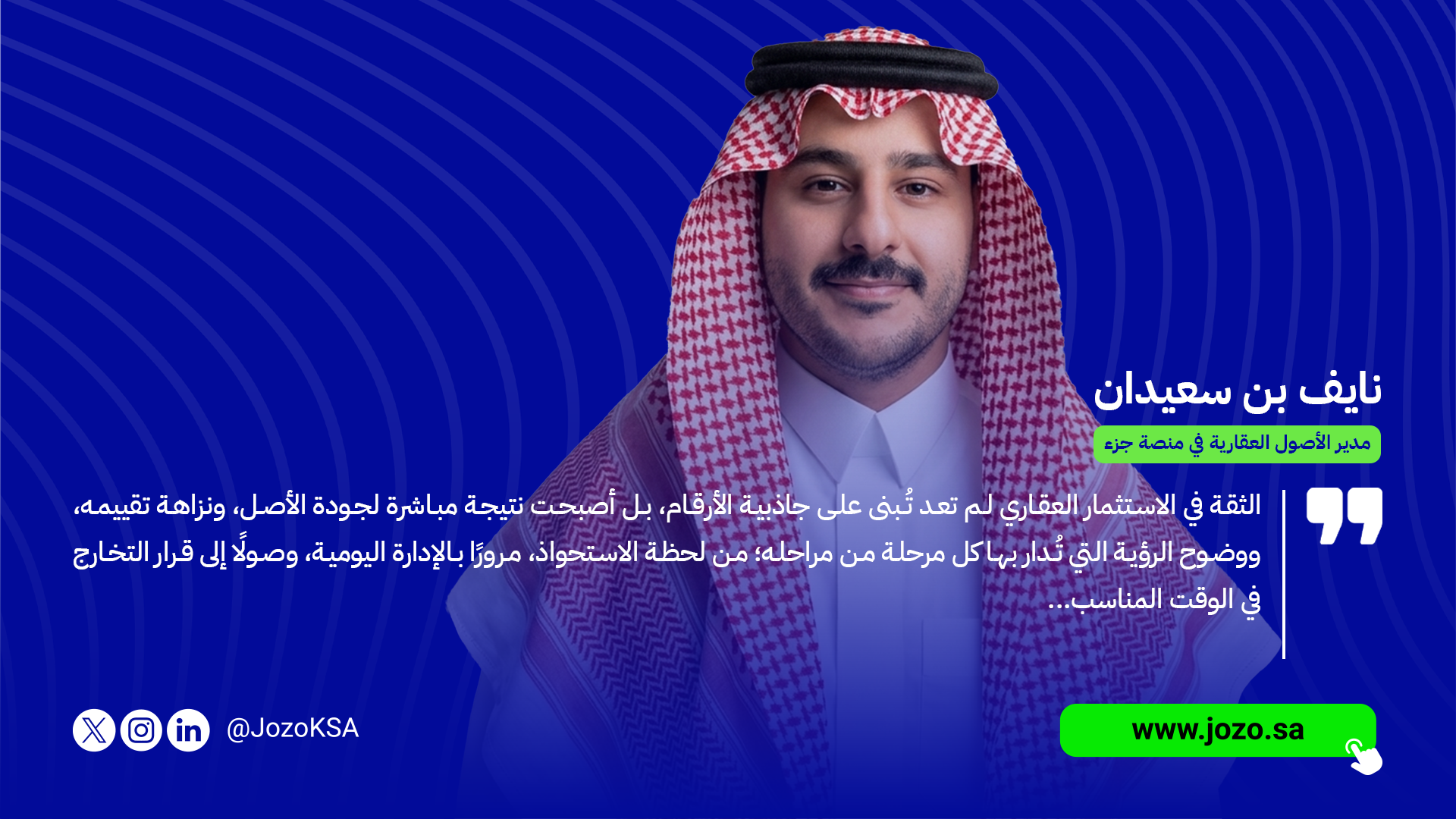
When investors consider a real estate opportunity, the first thing they usually look for is the expected return. That's natural — returns are one of the clearest indicators for evaluating and comparing opportunities. But from my own experience managing real estate assets, I believe there is a question that must come before the question of return.
Does this asset deserve an investor's trust?
A return is ultimately just an outcome. The quality of the asset, the competence of its management, and the level of risk attached to it are the real causes that produce that return and keep it sustainable.
This is where we start at Jozo. We don't treat the return as a starting point, but as the result of an evaluation and analysis process that begins before we acquire an asset and continues throughout its management, right up to exit.
It always begins with the asset
Two investment opportunities can advertise similar returns while the assets behind those numbers differ enormously. That's why we don't build our decisions on figures alone, but on a complete understanding of the property itself:
- Studying the location and surrounding environment — demand levels in the area and future developments that could affect value. Location isn't just an address; it's one of the strongest determinants of an asset's ability to generate sustainable value.
- Property valuation — not simply to establish what the property is worth, but to confirm that the acquisition price reflects fair value, and that investors aren't entering an asset bought above its real worth.
- Technical due diligence — one of the most important risk management tools we have. A good property isn't judged by its appearance, but by its structural and operational condition, and its readiness to perform without liabilities that surface later.
Returns are an outcome, not a starting point
Announcing a high return is easy. Sustaining it is the hard part. So we never treat a return as a standalone number. We always ask:
What supports this return?
- Does it rest on existing lease agreements?
- Are the cash flows stable?
- Have operating expenses been properly assessed?
- Are the risks accounted for?
These questions come before reading any yield figure, because investors aren't looking for a high number over a short period — they're looking for an investment that can hold its performance over time.
Asset management: the real value begins after acquisition
Some assume an investment succeeds the moment the property is bought. In reality, the most important phase starts right after.
Managing a real estate asset means preserving the quality of the property, monitoring its operational performance, improving its efficiency, managing tenant relationships, reducing risk, controlling expenses, and working continuously to maximise the asset's value.
An excellent property today needs excellent management to remain one tomorrow. That is the role of asset management — not only protecting the value of the investment, but developing it and making it durable.
Exit: a decision that starts on day one
One of the principles we hold to in asset management is that exit is not the final stage of the investment cycle — it's something to consider from the beginning.
So when we evaluate any asset, we don't only look at its ability to generate periodic income. We also look at how attractive it will be at exit, the liquidity of the surrounding market, and whether it can hold its value over time.
A successful investment isn't measured only by the income it distributes, but by its ability to preserve capital and offer suitable exit options when the time comes.
Transparency is the foundation of trust
In real estate investment, trust is built on clear information, not attractive numbers.
That's why we believe at Jozo that investors deserve the full picture: how the asset was valued, what the decision was based on, what risks exist, and how the asset will be managed throughout the investment period.
The clearer the information, the more informed the decision — and the more the relationship between investor and platform rests on trust before anything else.
Our philosophy at Jozo
At Jozo, we're not only working to make real estate investment accessible. We're building an investment experience grounded in transparency, discipline, and professional asset management.
We treat every real estate asset as a responsibility before it is an opportunity, and we believe protecting investors' interests starts with sound selection, then effective management, then planning the exit early — well before it's needed.
Returns are what capture attention, but trust is what brings investors back.
We don't build our decisions on returns alone. We build them on the quality of the asset, the competence of its management, and clarity of vision — because a successful investment starts with trust, and returns follow as a natural result.

